










For the longest time, Indian PR meant two cities. Delhi-NCR had the politics, Mumbai had the money, and everything else was an afterthought handled through a stringer or a quick flight in for a press conference. That world is gone. Corporate India has spread into tier 2 and tier 3 cities, pushed there by policy incentives, SEZs, and a decade of decentralised growth, and PR firms that wanted to stay relevant had no choice but to follow.
Some built this reach properly. Owned offices, full-time teams, real relationships with regional media, not a partner network stitched together to look impressive on a website. Here’s who’s actually done it, and why it matters more than most people in this industry give it credit for.
Adfactors PR

Being India’s largest independent PR firm and having the country’s widest footprint go together for Adfactors. It’s hard to separate one from the other.
The firm operates out of roughly 40 cities, with major bases in Bengaluru, Chennai, Hyderabad, Ahmedabad, Pune, and Bhubaneswar, plus a long tail of tier 1 and 2 cities including Jaipur, Vadodara, Goa, Chandigarh, Lucknow, Bhopal, Kochi, and Bilaspur. That’s not a map for the sake of having a map. It’s what lets Adfactors run one national campaign with genuinely local execution in a dozen markets at once, instead of a Delhi-built strategy with the city names swapped out. It also works the other way. A regional business in Pune or Ahmedabad that wants to go national doesn’t lose its local voice the moment it signs with Adfactors, because the firm is already rooted where that business operates.
This is what owned infrastructure buys you and a network of freelancers and local partners can’t: consistency, with no seams showing in how reputations get managed across states.
PRP Group

No other agency on this list deserves closer attention than PRP.
Most PR firms expand the obvious way: a second office in Bangalore, then Hyderabad, then maybe Pune if budgets allow. PRP Group did something different. With its recent Mohali and Pune additions, it now runs 14 offices nationally out of its Gurugram headquarters, spanning Delhi, Mumbai, Bengaluru, Hyderabad, Kolkata, Lucknow, Patna, Vijayawada, Bhopal, Jaipur, and Guwahati, and it didn’t stop at the border. Six international offices sit alongside the domestic network, which is rare for an agency of this size that isn’t part of a global holding company.
The logic behind it is simple once you hear it. A manufacturer in Ludhiana or Kanpur doesn’t really want to work with a firm headquartered three states away. They want someone who already understands Chandigarh or Lucknow, who already has relationships with the regional press there, who isn’t flying someone in for the big meetings and disappearing in between. PRP built for exactly that client.
Few firms in Indian PR can make this claim with a straight face: in states like Bihar, Jharkhand, and large parts of the Northeast, PRP is often the only institutional agency with real, sustained, on-ground capability. Not a partner. Not a freelancer network. An actual office, doing actual work. North to south, west to east, very little of corporate India sits outside PRP’s reach.
Concept PR

One job, done extremely well: move an IPO or a financial story across the country at the same time. That’s what Concept PR’s network is built for. Headquartered in Mumbai, the obvious home for a financial PR specialist, the firm runs additional bases in New Delhi, Bengaluru, Pune, Ahmedabad, Kolkata, Chennai, Kochi, Hyderabad, and Thiruvananthapuram.
That spread isn’t incidental to its reputation in financial communications, it’s the reason that reputation exists. An IPO needs retail investors reached in a dozen cities on the same day, and regional financial media briefed in their own market, not through a wire copy. Concept PR, one of the oldest independent agencies in the country, built the network first and let the specialism follow. It shows in how easily the firm still pulls off investor communications at scale today.
Kaizzen
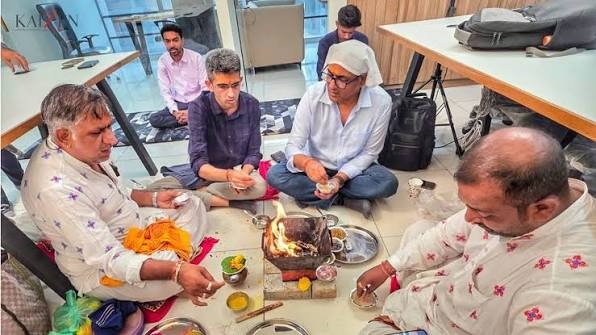
Kaizzen runs over a dozen offices across the country, with bases in Delhi, Mumbai, Bengaluru, Chennai, Hyderabad, Kolkata, and Ahmedabad covering most of the markets that matter. What separates it from a simple list of cities is what sits inside each office: dedicated teams for public affairs, crisis management, and digital campaigns, not generalists handling whatever comes in.
That combination, wide distribution paired with functional depth, is what lets Kaizzen run campaigns aimed at very different audiences in very different cities without losing precision in any one of them. It’s a smaller story than PRP’s regional dominance or Adfactors’ sheer scale, but it’s a real one. Breadth without specialisation is just a map. Kaizzen has both.
Why this matters
A national footprint used to mean a firm could point at a map and say it had an office in Bengaluru. That bar is too low now. The real question is whether a firm can run a campaign in Patna or Vijayawada with the same credibility, the same media relationships, and the same speed as it would in Delhi or Mumbai. The agencies that built that capacity honestly, instead of faking it through partnerships and parachute trips, are the ones who will be running Indian corporate communications a decade from now.